
Questions to Ask a Food Plant Flooring Contractor Before You Hire
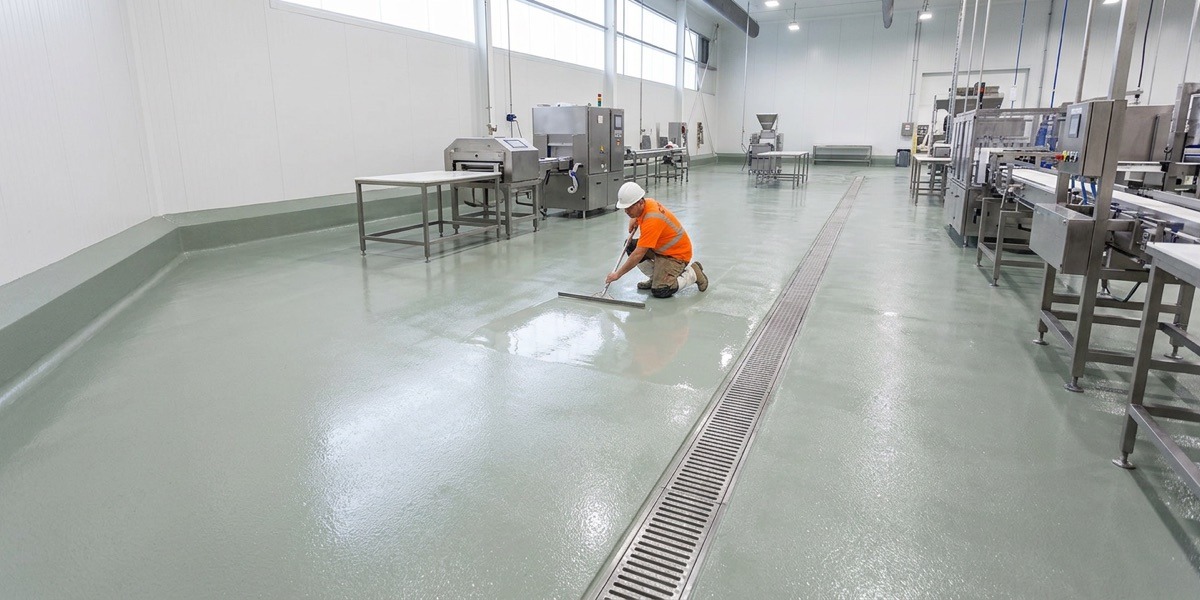
To hire a flooring contractor for a food plant, ask about eight things before you compare prices: references from food plants like yours, experience working inside a shutdown window, how they prepare the concrete, how they choose a system for each area, how they handle sanitation and drains, what the written warranty covers, who is accountable after the job, and who will be on site. Price comes last. A low bid that skips prep or misses the restart date costs more when the floor fails.
Why the questions matter more in a food plant
When a floor fails in a food plant, the problem is not the floor. It is the sanitation audit finding, the shut line and the production days lost while someone fixes it. Cracks and failed coves hold water and residue. Coatings that lift at drains let water into the slab. Hot washdown and thermal shock break down systems that were never meant for them.
You cannot test a floor on the day you hire the contractor. You can test the contractor.
1. Can you give us references from food plants like ours?
Ask for references from facilities with the same conditions as yours: wet processing, hot washdown, cooler and freezer areas, or dry packaging. Then call them. Ask whether the job finished inside the shutdown, whether the floor has held up, and how the contractor handled problems.
A good answer names the type of plant and the constraint. A warning sign is “we do all kinds of floors.”
2. Have you installed a floor inside a shutdown window?
Most food plants can’t stop for long. Ask how the contractor plans around a weekend, a holiday shutdown or a sequence of areas. Ask how they schedule prep, installation and cure time, and what happens if the slab shows a problem on day one.
For example, Surface Technology installed 10,000 square feet of industrial resinous flooring for Paragon Foods during a tightly scheduled holiday project.
3. How will you prepare the concrete?
Prep decides whether the floor lasts. Listen for mechanical preparation, such as shot blasting or diamond grinding, testing for moisture and contaminants before coating, and repair of cracks and spalls. Food plant slabs are often soaked with fats, oils and cleaning chemicals, which can keep a new floor from bonding.
A warning sign is “we clean it and coat it,” or no mention of a moisture test.
4. How will you choose the system for each area?
One system rarely suits a whole plant. Ask the contractor to specify by area.
- Hot and wet areas such as cook rooms, kettles, pasteurization and hot washdown usually need urethane cement, which handles thermal shock.
- Dry processing, packaging and traffic aisles often suit a high-solids epoxy.
- Short shutdowns may call for a fast-curing system such as MMA.
A contractor who names one product for the whole building has not looked at your plant.
5. How will you handle drains, slope and coves?
Water that sits on the floor is a sanitation problem. Ask how the contractor will slope the floor to drains, how the floor will tie into the drain bodies, and whether they will install integral cove bases so there is no joint at the wall to clean around.
6. What does the written warranty cover?
Ask for the warranty in writing before you sign. It should say what it covers (materials, workmanship or both), for how long, and what it excludes, such as chemical exposure or damage from cleaning. Ask what you have to do to keep it valid, for example which cleaners you can use. A warranty you can’t read until after the job is a warning sign.
7. Who is accountable after the job?
Ask who you call if a problem shows up six months later. One contractor responsible for the contracted work is simpler than a chain of installers and suppliers pointing at each other. Ask whether the contractor offers floor condition inspections or maintenance support after installation.
8. Who will be on site?
Ask for the name of the project lead and who does the work. Ask whether the crew has worked under food plant rules: GMP training, hairnets and footwear, allergen controls and sanitation sign-off before restart.
What a good bid includes
Ask every bidder to price the same scope, then compare. A useful bid states:
- The scope by area, with square footage for each
- The preparation method and the moisture testing plan
- The system and manufacturer for each area
- Drain, slope and cove details
- A schedule tied to your shutdown dates, with cure and return-to-service conditions
- The warranty terms in writing
- What the bid does not cover
If two bids differ by a lot, the difference is usually in prep or scope. Find out which before you decide.
How Surface Technology works with food plants
Surface Technology installs industrial flooring systems for food processing and other regulated facilities, with solutions selected to address sanitation, cleanability, durability, and operational requirements. Since 1988, we have helped facility teams evaluate concrete, select resinous systems and install them around production. From facility assessment and system selection through installation and ongoing support, Surface Technology provides a single point of accountability for its contracted flooring work.
Surface Technology is headquartered in Lancaster, Pennsylvania, and serves food and beverage plants throughout the United States. See our work in food and beverage processing, or request a Critical Surface Assessment and tell us about the plant, the areas and your shutdown dates.
Frequently asked questions
What should a food plant ask a flooring contractor?
Ask for references from similar food plants, experience working inside a shutdown window, how they prepare the concrete, how they choose a system for each area, how they handle drains and coves, what the written warranty covers and excludes, who is accountable after the job, and who will be on site.
What warranty should a food plant expect from a flooring contractor?
Expect a written warranty that states what is covered, for how long, and what is excluded, along with any cleaning or maintenance conditions. Read it before you sign.
How do I check a flooring contractor’s references?
Ask for references from food plants with conditions like yours, then call them. Ask whether the job finished inside the shutdown, how the floor has held up, and how the contractor handled problems.
Can a food plant floor be installed during a holiday shutdown?
Often, yes, if the contractor plans the prep, installation and cure time around the window and picks systems that fit it. Return to service depends on the specified system, site conditions, and intended use.
Is epoxy or urethane cement better for a food plant?
It depends on the area. Urethane cement suits hot and wet areas with thermal shock. High-solids epoxy suits dry processing and traffic aisles. Many plants use both.