
Food Plant Flooring That Holds Up to Washdown, Heat, and Production
Your floor takes hot water, steam, cleaning chemicals, forklifts, and temperature swings every shift, and it still has to pass inspection. Surface Technology installs seamless, sloped-to-drain floor systems for food and beverage plants and schedules the work around your production and sanitation windows.
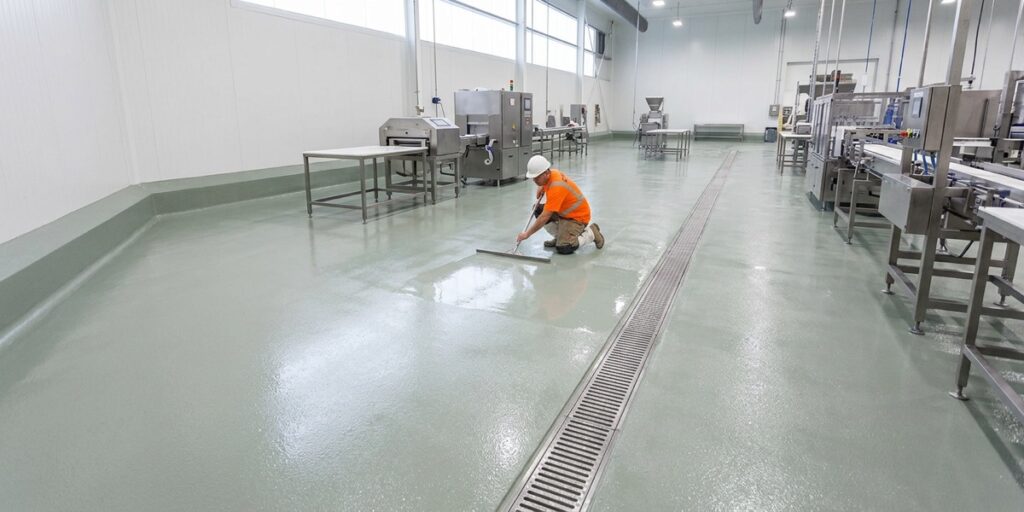
When a food plant floor fails, the floor is the smallest problem
A crack at a trench drain holds water and organic residue. A coating that has delaminated near the kettles lets washdown water into the slab. A smooth spot by the dock sends a forklift sideways. Each one turns into a sanitation finding, a safety incident, or a line that stops while someone patches the floor.
Where it usually starts
- Thermal shock: hot washdown on a cold slab cracks standard coatings and pulls them off the concrete
- Standing water: poor slope and failed drains leave puddles that breed bacteria and cause slips
- Open joints and coves: every gap is a place residue collects and sanitation crews cannot reach
Built for sanitation and inspection
Seamless and cleanable
A seamless floor has no joints or cracks where bacteria and residue collect. Integral cove bases carry the floor up the wall so there is no corner to clean around. Your sanitation crew spends less time on the floor, and it stays clean between audits.
Sloped to drain, made for washdown
We build the floor to the pitch your drains need, so water moves off the floor instead of sitting on it. Systems are chosen to take steam cleaning and hot washdown without cracking, and to meet the sanitation standards of USDA- and FDA-inspected plants.
The right system for each part of the plant
A bottling hall, a kettle room, and a dry warehouse need different floors. We choose by temperature, moisture, chemicals, and traffic.
Hot, wet, and washdown areas
Urethane cement. Cook and kettle rooms, pasteurization, and hot washdown create thermal shock that cracks standard epoxy. Urethane cement moves with the slab, resists hot water and steam, and keeps a seamless, hygienic surface. It can also go over new or damp concrete.
Dry processing, packaging, and aisles
High-solids epoxy. These areas need abrasion resistance against forklift traffic and spills, without the thermal shock. Epoxy is durable, easy to clean, and cost-effective here.
Areas that cannot be down long
MMA. Methyl methacrylate is the fastest-curing system, ready for service in about an hour per coat. It suits weekend installs and rapid repairs in plants that run around the clock.
Food and beverage facilities we work in
- Meat, poultry, and seafood processing
- Dairy processing
- Bakeries and commercial kitchens
- Breweries, wineries, distilleries, and bottling
- Mixing, canning, and packaging
- Dry and cold storage
- Vegetable and sugar processing
Brewery and beverage floors
Brewhouses and bottling lines combine hot water, caustic cleaners, sugars, and constant wet traffic. We install urethane cement and slip-resistant systems that drain properly and hold up to CIP chemicals and hot washdown, so the floor is not the reason a brew day gets moved.
Installed around your production and sanitation schedule
1. Walk the plant
We look at the slab, the drains and slopes, the coves, the temperatures, and your cleaning program.
2. Plan the window
Weekend, holiday shutdown, or area by area. Work is sequenced so each zone is back in service on the agreed date.
3. Prepare and install
Shot blasting and diamond grinding, moisture testing, crack repair, then the system and coves.
4. Back to production
Return-to-service requirements depend on the specified system, site conditions, and intended use. MMA can be faster. Many plants book holiday shutdown work months ahead, so if your window is Christmas week, talk to us early.
Proven in food plants and kitchens
Two projects show how we work inside a running operation. Names and quotes appear only where the customer has cleared them.
A new food facility with one week to get the floor down
A western Pennsylvania specialty foods distributor needed 10,000 square feet of processing floor finished between Christmas and New Year, the busiest week of the year for flooring crews. We shot-blasted the new slab, set up drainage, and installed urethane slurry flooring with cove bases inside the seven-day window.
10,000 sq ft · 7-day window · Construction schedule held
A peeling floor in a working bakery kitchen
A Lancaster bakery’s kitchen floor coating was peeling, and the kitchen had to reopen within days. We removed the failed coating, repaired cracks, and installed slip-resistant urethane cement over a weekend. The bakery reopened four days after we started, a day ahead of schedule.
1,400 sq ft · Installed over a weekend · Reopened in 4 days
Food plant flooring questions
What is the best flooring for a food processing plant?
It depends on the zone. Urethane cement is the usual choice for hot, wet, and washdown areas because it handles thermal shock. High-solids epoxy suits dry processing, packaging, and traffic aisles. MMA works where the floor can only be down for hours. Most plants use more than one.
Why does epoxy crack in food plants?
How long does a food plant floor installation take?
Standard epoxy can crack and lose its bond when hot water or steam hits a cold slab. That thermal shock is why cook, kettle, and washdown areas usually get urethane cement, which expands and contracts with the concrete.
Many urethane cement installs take about three days and fit a weekend. MMA can be ready for service in about an hour per coat. The schedule depends on the area, the preparation the slab needs, and the cure time of the system.
Can you fix drainage and slope problems?
Yes. We can build the floor up to the pitch your drains need so water moves off the floor, and we install integral cove bases so the floor and wall seal together.
Do you work in breweries and beverage plants?
Yes. Breweries, wineries, distilleries, and bottling lines use the same systems as food plants: urethane cement for hot washdown and caustic cleaners, with slip-resistant texture for wet traffic.
What should I ask a flooring contractor before hiring one for my food plant?
Ask for references from similar plants, experience working inside a shutdown window, how they prepare the concrete, how they pick a system for each area, what the written warranty covers, and who is accountable after the job. See our full list of questions to ask a food plant flooring contractor.